Easy pan focaccia
1 pan at the original size. Read the recipe here, then scale and measure.
Know the batch you are making.
Pan: 9 × 13 in pan (23 × 33 cm). Oven: 191°C / 375°F. Baking: 25–30 minutes
This is a wet batter-style dough, not a firm dough to shape by hand. Keep the oil for the pan separate. Yeast grams approximate 1 tbsp. Optional proprietary seasoning and cheese powder are omitted.
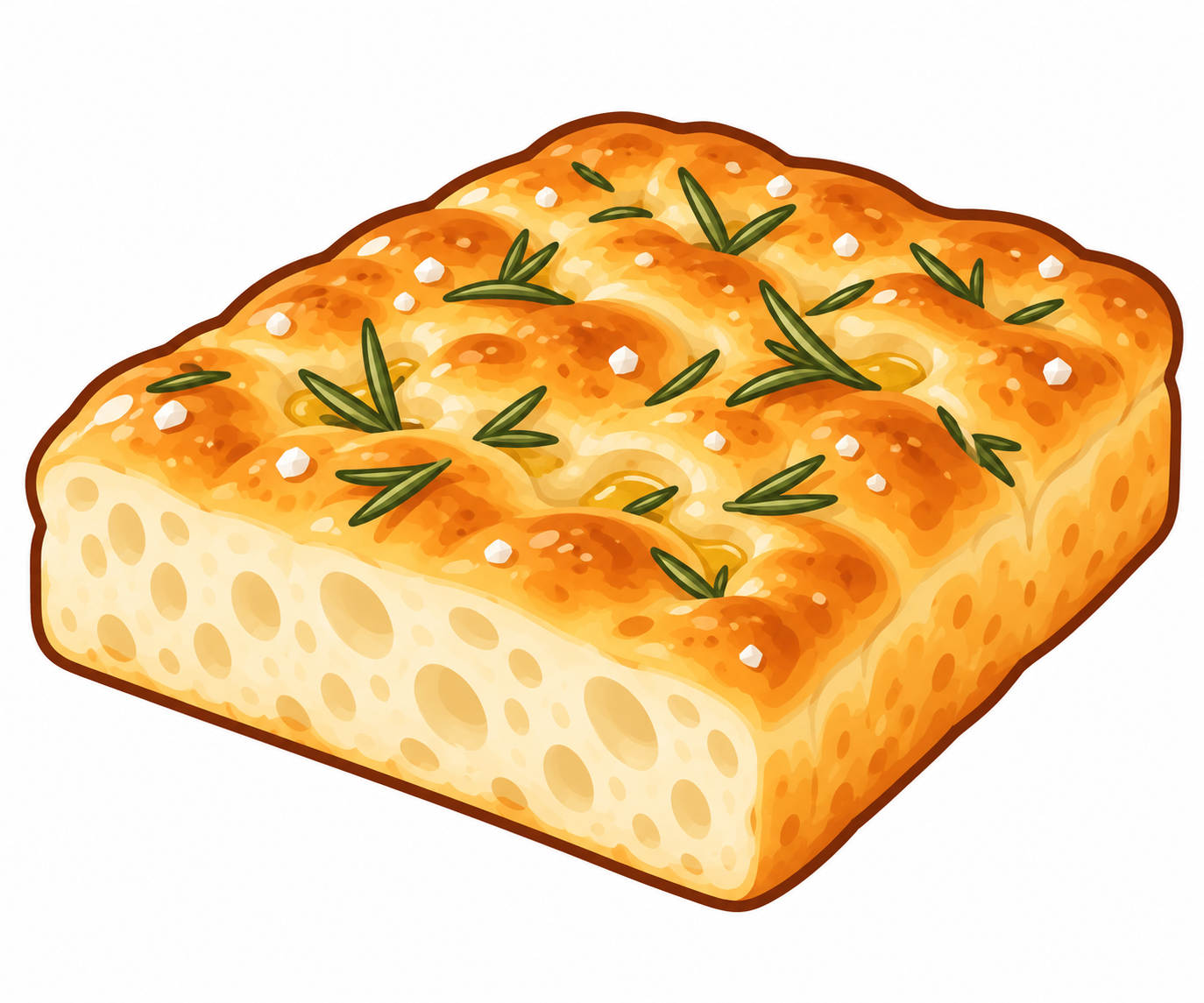
Reference recipe, not an independently tested BakeInGrams bake. The calculations and planning notes are ours; formulation and method are attributed below. Illustrations are not test-batch photographs.
Ingredients & batch targets
Keep the original base list alongside your current targets. Choose a multiplier once for the whole recipe; amounts marked approximate retain that qualification.
Base: 1 pan.
Dough
| Ingredient | Base quantity | Current target |
|---|---|---|
| All-purpose flour | 420 g | 420 g |
| Water | 340 g | 340 g |
| Fine table salt | 8 g | 8 g |
| Olive oil | 35 g | 35 g |
| Instant yeast (approx.) | 9 g | 9 g |
Pan
| Ingredient | Base quantity | Current target |
|---|---|---|
| Olive oil | 25 g | 25 g |
Finish
| Ingredient | Base quantity | Current target |
|---|---|---|
| Olive oil | 13 g | 13 g |
Make & bake
- Grease the pan, then spread the pan oil across its base. Mix the dough ingredients vigorously with an electric mixer for one minute.
- Transfer the sticky dough to the pan. Cover for about an hour, until visibly expanded but still stable.
- Preheat to 191°C / 375°F. Dimple the dough gently and distribute the finishing oil on top.
- Bake 25–30 minutes to a golden surface. Rest five minutes, then lift onto a cooling rack.
Use the linked original for the author’s expanded technique and any variation notes. We have not compared outcomes from different brands or ovens.
Read the formula before changing it
The flour lines in this selected list total 420 g. Keep each line in its own stage: a starter or filling is not an instruction to add that ingredient twice to the main dough.
A half-batch example
All-purpose flour: 420 × 0.5 = 210 g. Use the multiplier once for the whole list. Keep the source temperature and original piece size; use additional or fewer matching pans rather than assuming time scales linearly.
Preserve pan area and dough thickness
This base is for a 9 × 13 inch pan. A half batch in the same pan spreads thinner, while two batches in one pan make a deeper bread. Use appropriately matched pans if you want the original thickness; the ingredient multiplier does not solve pan conversion.
Do not move pan oil into the dough
Dough, pan and finish are separate stages in the table. A larger batch using two matching pans needs pan preparation twice, but that oil is not a signal to pour more oil into the mixing bowl. Keep each group with its stated use.
Decide what stays fixed
Keep the ingredient type, measuring condition and process stage attached to every amount. Grams are mass; weight ounces convert that mass. Cup estimates do not define substitutions, and the converter’s country setting does not rewrite the author’s gram quantities.
If the first bake behaves differently, record the flour brand, actual weights, dough condition, pan and oven setting before changing several ingredients at once. Those notes would be real evidence; this page does not claim they have already been collected.
Source & editorial responsibility
King Arthur Baking · original recipe ↗
Editorial assembly and calculation review: October 28, 2026. This date does not imply a new cooking test or a new source-author update.
Read the calculation and evidence policy · Report a specific correction
Planning help: Changing pans: calculate the batch before changing the bake