Kkwabaegi
Korean twisted doughnuts. Choose your batch, then measure one ingredient at a time.
A little street-food joy,
made in your kitchen.
A chewy, yeast-raised twist with a cinnamon-sugar finish. A shaping guide and separate coating list keep the batch easy to organize.
Jump to ingredients ↓ · Making guide ↓
Source-based, not independently bake-tested by BakeInGrams. Illustrations explain the recipe; they do not show our own cooked batch.
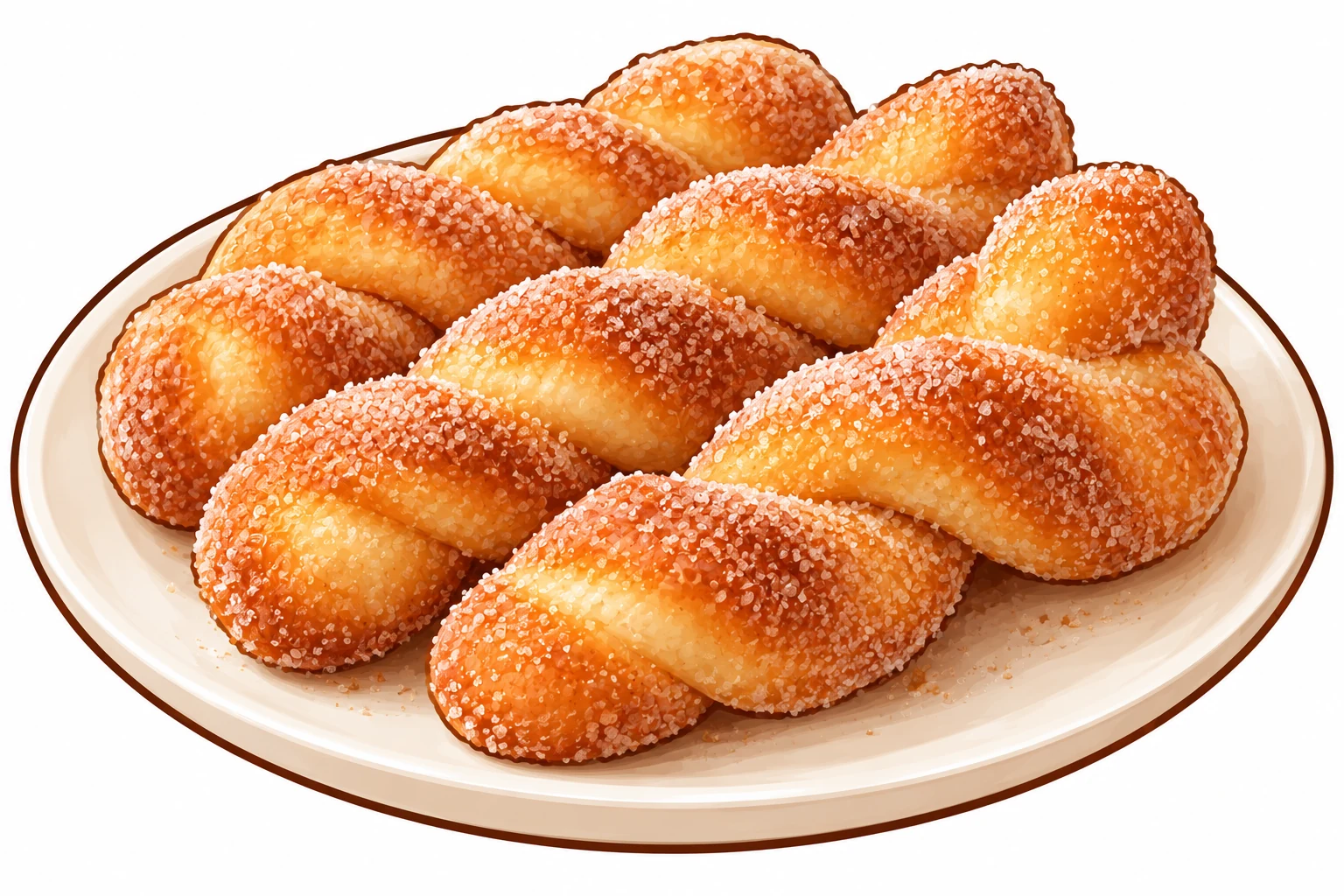
Ingredients, clearly separated.
Source batch: 15 pieces.
Dough
Coating
Source grams remain grams. Milk and spoons retain their labeled volume; no yeast, salt, nut or egg weight is invented. Hotteok brown-sugar grams are a packed-reference estimate, not an author-supplied weight. Global converter settings do not change these source units.
Supplies — choose for your pan
- Vegetable oil: choose a vessel and depth that lets the doughnuts float without overfilling the pan. Oil is not part of the dough total and is not scaled with yield.
- Use a rack over a tray for draining. Lightly flour the working surface only if needed; do not knead a new flour allowance into the batch.
Contains wheat, milk and egg. Glutinous rice flour does not make this wheat-containing recipe gluten-free.
Make & cook
- Combine milk, dough sugar, yeast and egg; add flours and salt, then butter. Knead 10–15 minutes until elastic; cover until doubled, roughly an hour.
- Divide equally; rest covered 15–20 minutes. Roll each piece into a rope, twist, fold ends together and seal.
- Proof the shaped twists until expanded, about 40 minutes. Prepare the coating separately.
- At 170–175°C, fry small batches about 1–2 minutes on one side and about 30 seconds after turning, checking color and the first sample’s center. Drain and coat while warm.
Three useful checkpoints.
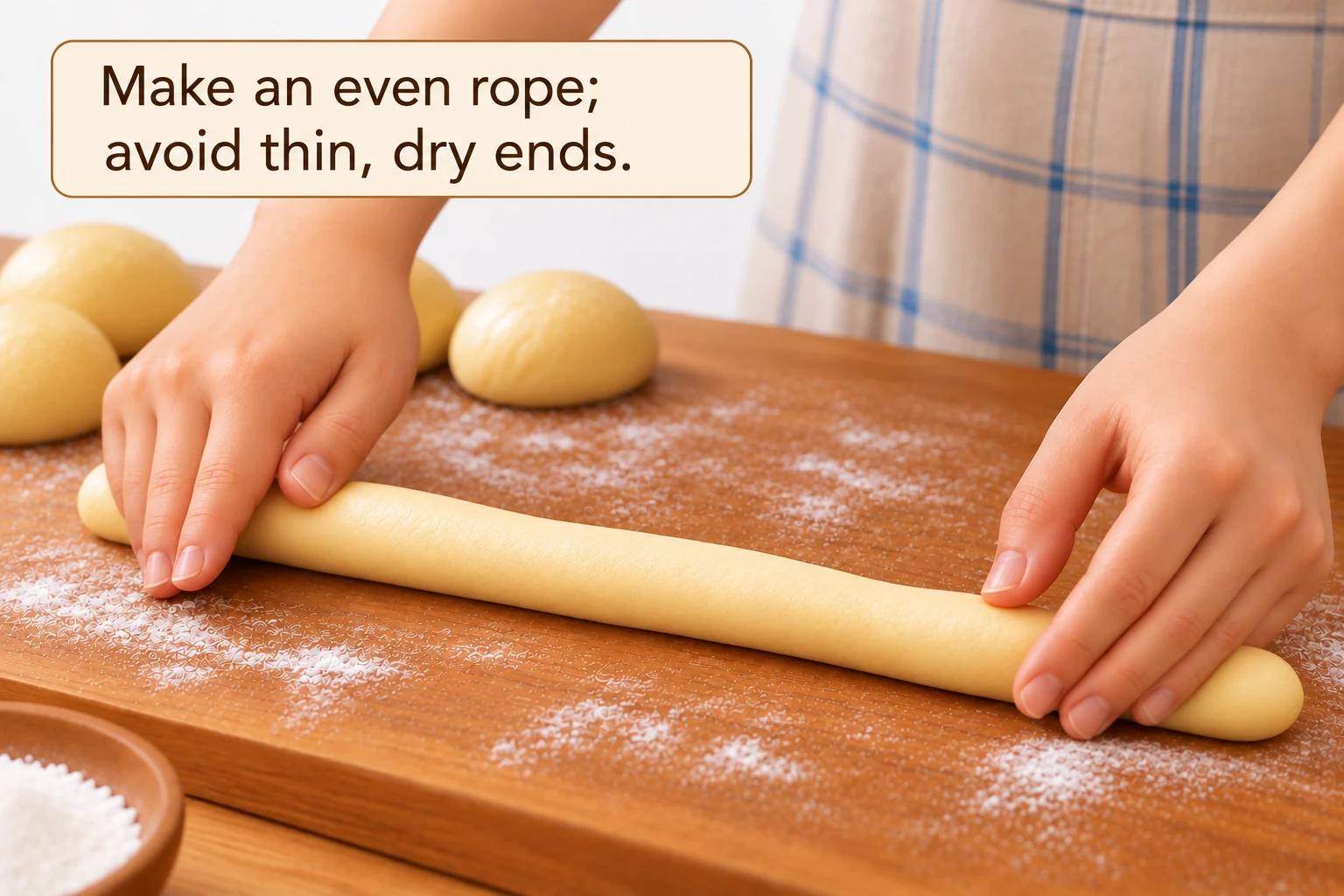
1. Roll
Make an even rope; avoid thin, dry ends.
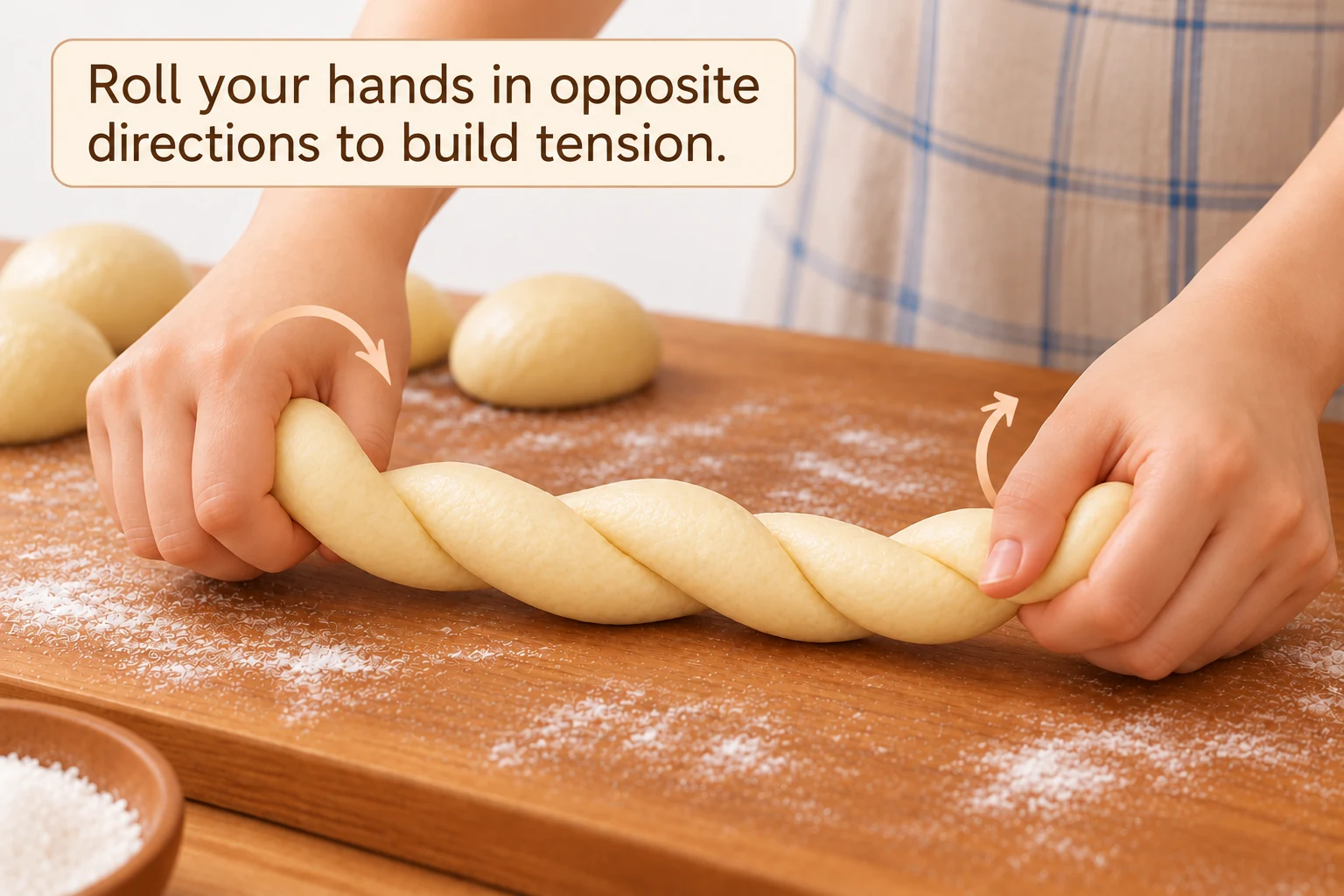
2. Twist
Roll your hands in opposite directions, fold the rope and pinch the ends securely. Proof until expanded before frying.
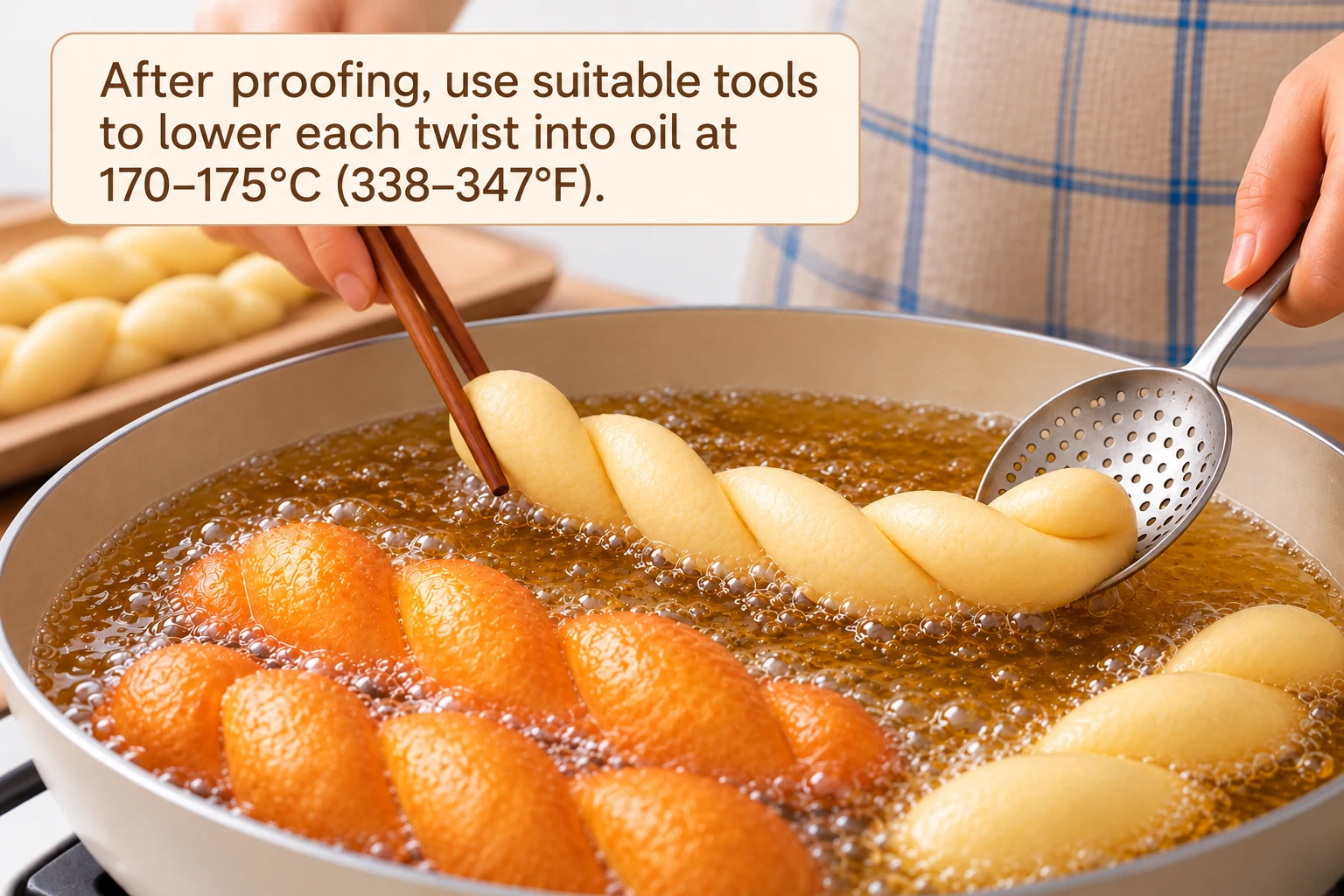
3. Fry
After proofing, use suitable tools to lower each twist into oil at 170–175°C (338–347°F). Fry in small batches, turn until golden, then drain and coat while warm. Keep fingers clear of the hot oil.
If the first piece needs work
Twists open
Pinch the join securely before the last proof. A shaping photo is a checkpoint, not proof that the seam is sealed.
Outside dark, center doughy
Check oil temperature with a thermometer and keep piece size consistent. Cut a cooled test piece before continuing; do not rely on color alone.
Oil temperature drops
Cook fewer pieces per batch and let the oil recover. Doubling the recipe means additional batches, not twice the oil temperature.
Fractional egg
For 8 pieces from a 15-piece source, use 8/15 of the beaten egg contents by measured weight. No fixed 50 g egg is assumed.
Portion weight
Weigh the completed dough and divide by the selected count. We do not infer an exact dough-piece weight from milk volume or an unspecified egg weight.
Recipe source & measurement notes
Uses Julian Kim’s glutinous-rice-flour version, published by SBS. Source weights stay unchanged; milk remains mL and the egg remains a count. SBS teaspoons are 5 mL. This is a chewy variation, not an all-wheat dough.
Julian Kim · SBS Food / A Day in Seoul · Read the original recipe ↗
Source checked 2026-10-27. Method summaries are written for this guide. Recipe and process illustrations are supplied for BakeInGrams; they are not photographs of a documented test batch. No source-author photography is reproduced. Our batch math scales ingredient quantities, not proofing time, heat or the quantity of oil in your pan.
Before dividing, weigh the finished dough and filling separately and divide each by your chosen count. We do not claim an exact piece weight when the source uses volumes or an egg count.