Matcha white chocolate cookies
24 cookies at the original size. Read the recipe here, then scale and measure.
Know the batch you are making.
Baking sheets, parchment, mixer, kitchen scale. Oven: 175°C / 350°F. About 15 minutes. 20 min prep + at least 2 hr chilling + baking and cooling
Yield varies with slice thickness. Fan oven: 160°C / 325°F. Keep salt as pinches. For partial yolks, mix separated yolks and weigh the fraction; no fixed weight is assumed.
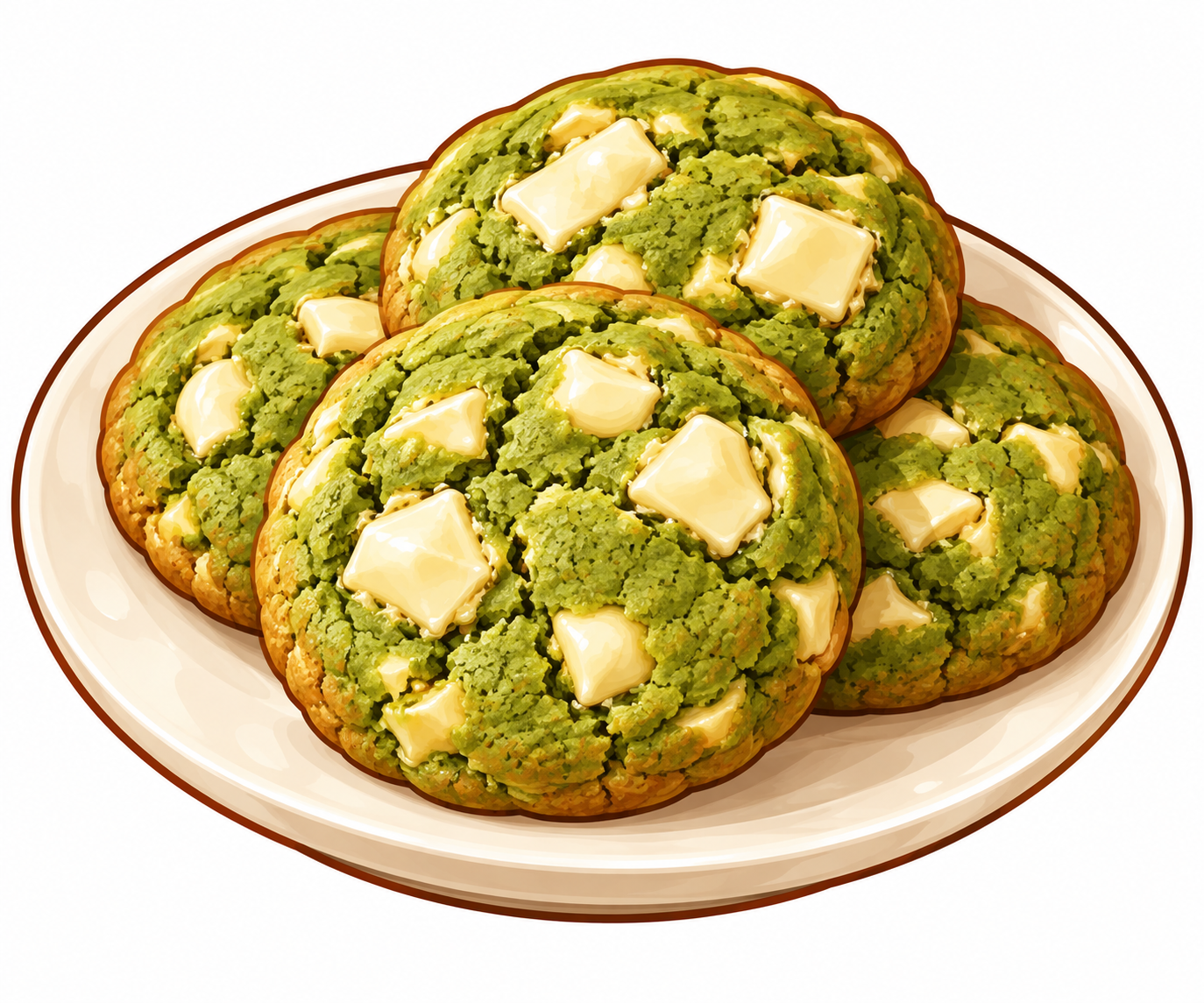
Reference recipe, not an independently tested BakeInGrams bake. The calculations and planning notes are ours; formulation and method are attributed below. Illustrations are not test-batch photographs.
Ingredients & batch targets
Keep the original base list alongside your current targets. Choose a multiplier once for the whole recipe; amounts marked approximate retain that qualification.
Base: 24 cookies.
Dough
| Ingredient | Base quantity | Current target |
|---|---|---|
| All-purpose flour | 240 g | 240 g |
| Matcha powder | 15 g | 15 g |
| Unsalted butter, softened | 170 g | 170 g |
| Diamond Crystal kosher salt | 1 pinch | 1 pinch |
| Powdered sugar | 130 g | 130 g |
| Large egg yolks | 2 count | 2 count |
| White chocolate baking chips | 50 g | 50 g |
A half batch uses one of the original two yolks. For another fraction, separate the yolks, mix and weigh the actual contents, then divide that weight. Keep the source pinch explicit; a pinch has no fixed gram weight here.
Make & bake
- Sift flour with matcha. Cream butter, salt and sugar; incorporate yolks. Fold in dry ingredients, then chips, without prolonged mixing.
- Form two logs per base batch. Wrap and refrigerate at least two hours, until firm.
- Slice about 7 mm thick; leave 2.5 cm gaps on lined sheets. Bake at 175°C / 350°F until edges lightly color, around 15 minutes.
- Rest on the tray five minutes, then finish cooling on a rack.
Use the linked original for the author’s expanded technique and any variation notes. We have not compared outcomes from different brands or ovens.
Read the formula before changing it
The flour lines in this selected list total 240 g. Keep each line in its own stage: a starter or filling is not an instruction to add that ingredient twice to the main dough.
The listed sugar lines add to 130 g, about 54.2% of the listed flour weight. This is a calculation from the selected list, not a nutritional value or a suggested sugar reduction. Syrups and sweetened inclusions are not counted as pure sugar here.
A half-batch example
All-purpose flour: 240 × 0.5 = 120 g. Use the multiplier once for the whole list. Keep the source temperature and original piece size; use additional or fewer matching pans rather than assuming time scales linearly.
Log count follows the batch
The base method forms two logs. A half batch can form one comparable log, preserving its diameter and slice thickness. Shortening the chilling time simply because you made fewer cookies does not establish that the dough is firm enough to slice.
Weigh yolks rather than guessing their grams
The source uses two yolks at base batch. A half batch needs one yolk; other fractions should come from mixed, weighed yolks. Whole eggs are not equivalent to yolks, and the site’s generic egg count does not supply a substitute formula.
Decide what stays fixed
Keep the ingredient type, measuring condition and process stage attached to every amount. Grams are mass; weight ounces convert that mass. Cup estimates do not define substitutions, and the converter’s country setting does not rewrite the author’s gram quantities.
If the first bake behaves differently, record the flour brand, actual weights, dough condition, pan and oven setting before changing several ingredients at once. Those notes would be real evidence; this page does not claim they have already been collected.
Source & editorial responsibility
Just One Cookbook · Namiko Hirasawa Chen · original recipe ↗
Cookie gram amounts were cross-checked against the preserved original metric printout. This is not an independently developed BakeInGrams formula.
Editorial assembly and calculation review: October 28, 2026. This date does not imply a new cooking test or a new source-author update.
Read the calculation and evidence policy · Report a specific correction